
Running a Miami-Dade County Sex Offender Check
The Florida Sexual Offenders and Predators Search is the primary public source for Miami-Dade County registry information. FDLE operates one statewide system, so the county does not maintain a competing public list. A search can begin with a name, but it does not have to. Selecting Miami-Dade County with blank name fields produces a geographic set. City and ZIP criteria can narrow that set when the reader is focused on a smaller area.
Use the FDLE profile for the current public designation, reported addresses, qualifying offense, identifiers, and registration status. The Miami-Dade Sheriff's Office handles local registration functions and receives concerns about compliance. The National Sex Offender Public Website adds other states, territories, and tribal jurisdictions when a person or address may cross Florida's boundary. These channels complement one another. They are not general criminal-history reports.
Miami-Dade Registry Categories
Florida uses the legal categories sexual offender and sexual predator. It does not present Miami-Dade County records as a simple public Tier I, Tier II, and Tier III map. A predator designation follows the criteria in the Florida Sexual Predators Act. Offender registration rests on separate qualifying law. The exact label on the profile matters, and readers should not apply the word predator to every listed person.
- Sexual offender
- A person with a registration duty under section 943.0435 or another applicable Florida provision.
- Sexual predator
- A distinct statutory or judicial designation governed principally by section 775.21.
- Registration status
- The profile's current public description of the person's registry standing, which must be read with its update information.
These terms describe statutory registration. They do not summarize every event in a person's Florida criminal history.
Searching the Florida Sexual Offenders and Predators Search
FDLE accepts at least one of five core criteria: first name, last name, city, county, or ZIP Code. Full and partial names are supported. A county-wide Miami-Dade search can leave both name fields blank and select the county. For a known person, begin with a partial or full name and compare the official photograph, aliases, legal status, and other published identifiers before drawing any conclusion.
- Open the FDLE search and review its current notices and conditions.
- Enter a full or partial name, or use city, Miami-Dade County, or ZIP Code for a geographic search.
- Review the result list without assuming that a similar name identifies the person sought.
- Open the full profile and read designation, offense, address, and registration status together.
| Field Label | Type | Required | Notes |
|---|---|---|---|
| First Name | Text | One of five | Full or partial name accepted |
| Last Name | Text | One of five | Full or partial surname accepted |
| City | Text or select | One of five | Can return registrants tied to that city |
| County | Dropdown | One of five | Select Miami-Dade for a county sweep |
| ZIP Code | Text | One of five | Provides a geographic search route |
Selected results can be printed to PDF in groups of no more than 25. For a larger county review, use the registry's public-data options instead of treating one PDF as a complete Miami-Dade County file.
Miami-Dade Registry Search Screen
The official FDLE registry form shows the neutral criteria used for Miami-Dade County searches.
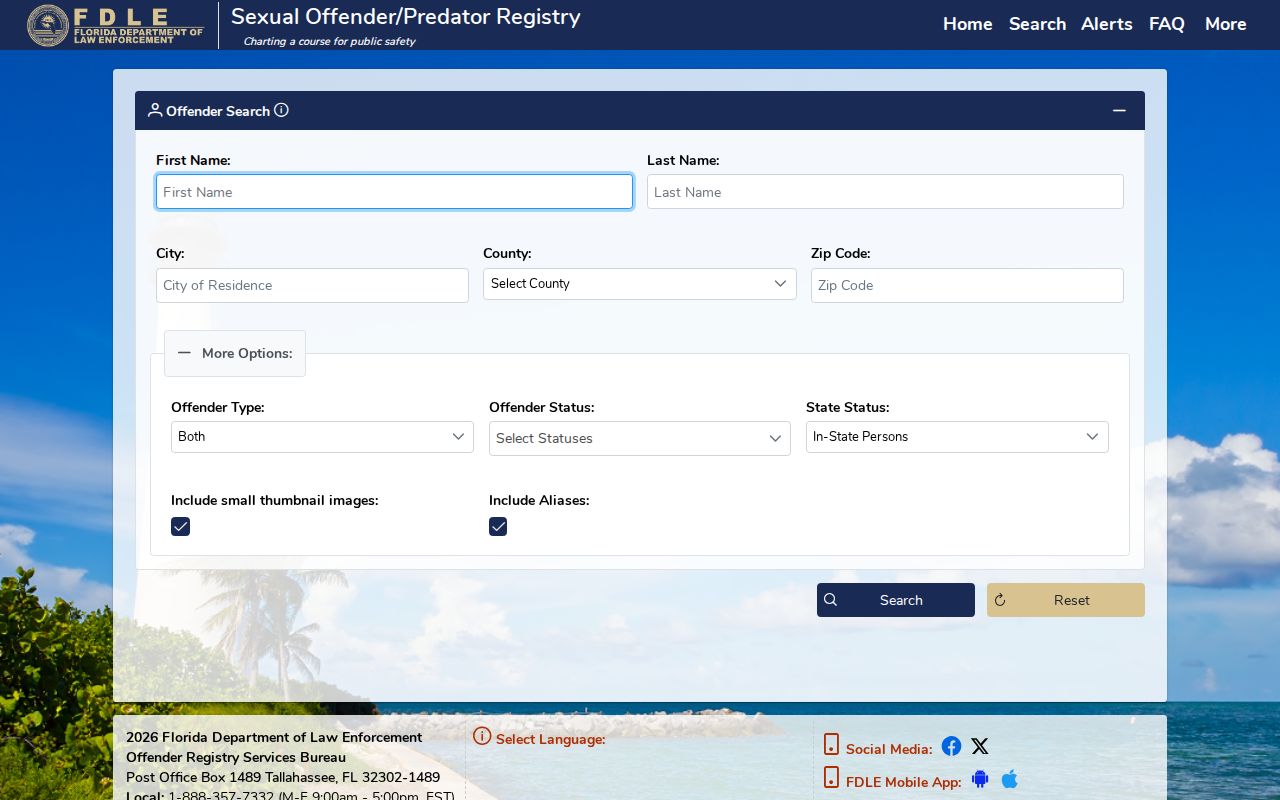
The form's place fields make a county or ZIP search possible without centering the search on a private person's profile.
Reading Miami-Dade Registry Status
An address is reported registry information, not proof that a person stands at that location now. Temporary, permanent, or transient address data may appear when legally publishable. Map placement can also reflect reporting and geocoding. Check the profile's status and update information before relying on the location. Terms such as registered, supervised, absconded, wanted, and released are not interchangeable.
Check the whole profile. A map marker alone does not establish current presence, complete criminal history, or a new offense.
FDLE states that contributing sheriffs, FDC, driver-license authorities, and other law-enforcement sources provide registry data. FDLE does not independently confirm every submitted item. That is why the official correction channel matters when a profile appears wrong.
What a Miami-Dade County Registry Profile Shows
A public FDLE profile combines identifying, legal, location, and status fields. It may show more than the qualifying conviction, yet it is not a complete rap sheet. Read the offense jurisdiction and conviction date with the designation. Physical details and aliases help distinguish similar names, while vehicle, vessel, scar, mark, or tattoo information can appear when reported and authorized for release.
| Name and Aliases | Published names and known aliases used to distinguish possible matches. |
|---|---|
| Photo and Description | Photo, age or birth information, sex, race, height, weight, hair, and eye color as available. |
| Reported Address | Permanent, temporary, or transient location information that Florida law permits FDLE to display. |
| Offense and Jurisdiction | Qualifying offense, conviction date, and jurisdiction associated with the registration duty. |
| Florida Designation | Sexual offender or sexual predator, not a generic three-tier label. |
| Registration Status | Current public status plus supervision or registration information reported to FDLE. |
Vehicles, vessels, scars, marks, tattoos, and supervision details may also appear when reported. Missing fields should not be filled with assumptions from another source.
Miami-Dade Registry Profile Context
FDLE's registry information and wanted-subject interface provides legal notices and status context for Miami-Dade County readers.
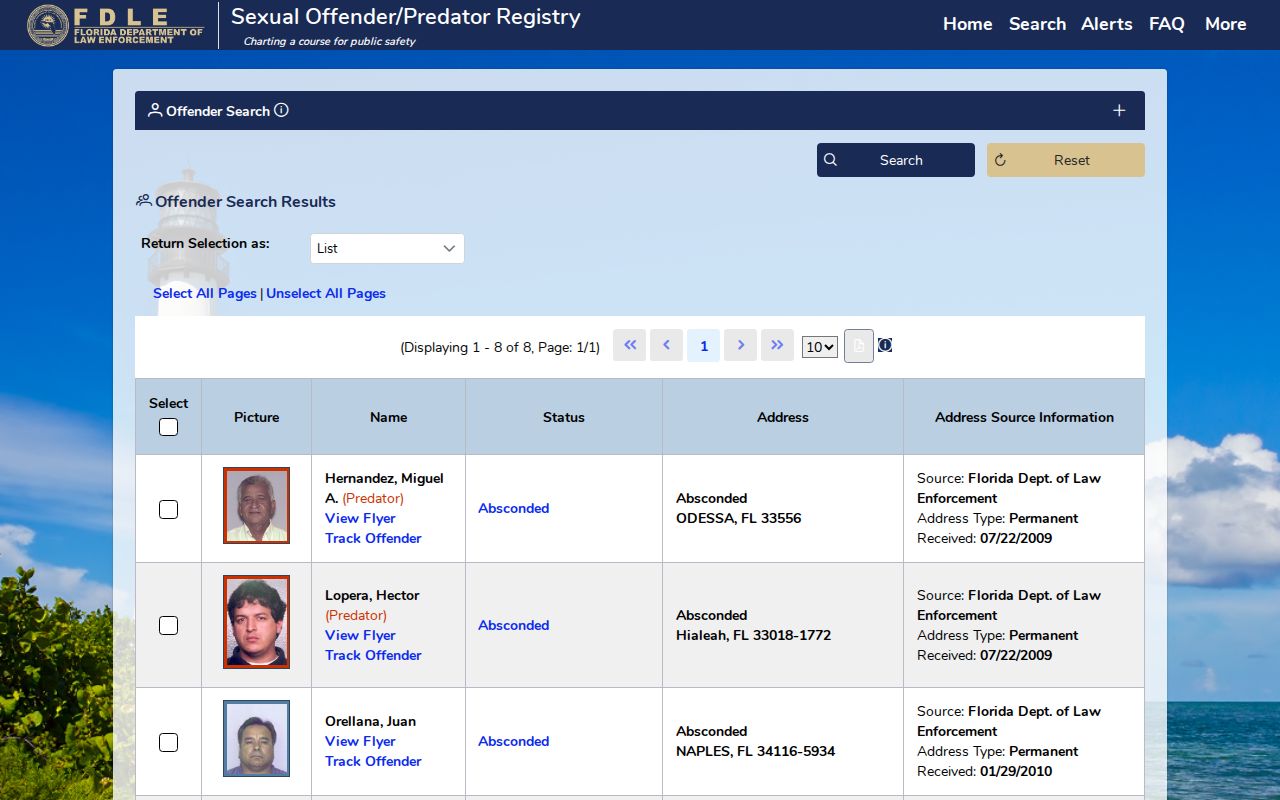
Its notices reinforce that a profile's current status and source date deserve more weight than an isolated screenshot.
Registration Requirements and Levels in Florida
Miami-Dade County registration duties depend on the qualifying statute, offense, designation, release date, and other case facts. Many duties last for life unless a statutory removal mechanism applies. Reporting frequency also varies. Florida's public system should not be reduced to another state's tier chart, so the comparison below uses the two labels Florida actually publishes and preserves the case-specific nature of duration and reporting.
| Florida Category | Duration | Reporting Schedule |
|---|---|---|
| Sexual offender | Often lifetime, subject to the governing statute and any lawful removal route | Depends on the qualifying law and current duty |
| Sexual predator | Controlled by the Florida Sexual Predators Act and applicable court or statutory terms | Registration and verification follow section 775.21 requirements |
Sections 943.0435, 775.21, 944.607, and 985.4815 govern different parts of Florida registration. Current statutory text and the individual profile control over a simplified label.
Miami-Dade and National Registry Searches
The FDLE search is best for Florida detail and Miami-Dade County filtering. The U.S. Department of Justice's NSOPW search is the broader layer when movement across state or tribal lines is possible. It queries participating jurisdictions, but the originating registry remains the source for a profile's legal details. A national result should lead back to the contributing jurisdiction.
| Search | Best Use | Limit |
|---|---|---|
| FDLE | Florida and Miami-Dade County filters, profiles, and state status | Not a nationwide criminal-history search |
| NSOPW | Cross-state, territorial, and tribal registry coverage | Details depend on each contributing jurisdiction |
The NSOPW search page provides that wider geographic route.
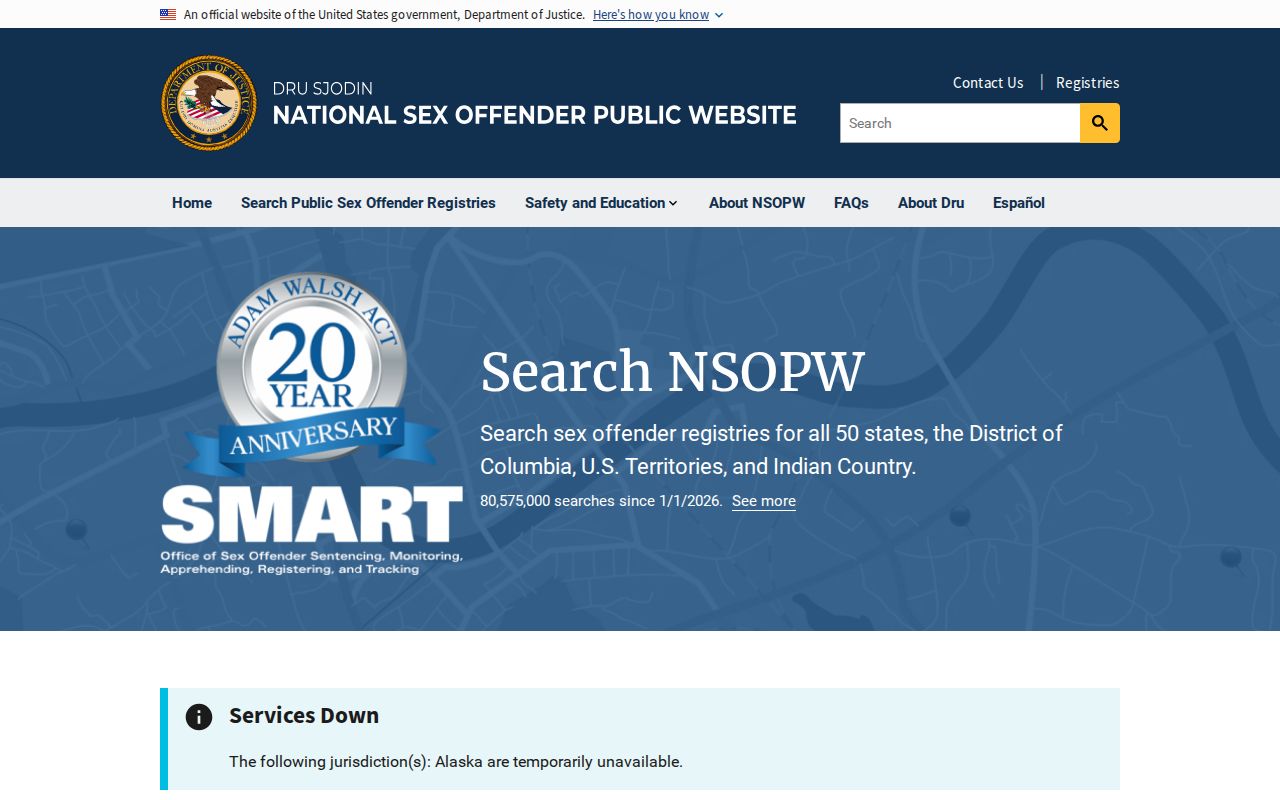
Use it as a second layer, then confirm the record on FDLE or the state registry that supplied it.
Correcting Miami-Dade Registry Information
A person who believes an FDLE profile contains an error should contact FDLE Offender Registry Services at 1-888-357-7332 or sexpred@fdle.state.fl.us. The unit lists weekday service from 9 a.m. to 5 p.m. Eastern. Provide the profile and the specific field in question. Do not publish an accusation or attempt to force a correction through personal contact.
Suspected failure to register belongs with the Miami-Dade Sheriff's Office or FDLE. An immediate threat goes to 911. Non-emergency concerns should be factual and should identify the profile, conduct, location, and time without confrontation. Law enforcement determines whether noncompliance occurred.
Lawful Use of Miami-Dade County Registry Records
Florida publishes registry information for community notification and safety awareness. Families may use it to understand reported locations and official legal status. Publication does not grant permission to enter property, contact a registrant or household, or interfere with anyone. A registry entry also should not be used as a substitute for emergency services or a complete criminal-record review.
Do not confront or harass anyone. Threats, stalking, trespass, vigilantism, or misuse of data published under sections 943.0435 and 775.21 can violate Florida criminal or civil law. Report safety concerns to law enforcement.
Confirm a Miami-Dade County profile through FDLE before acting on it. If the concern is about accuracy, use Registry Services. If it is about possible noncompliance, use the sheriff or FDLE. Those routes protect both public safety and the integrity of the official record.