
Narrow Hialeah Report Requests
A focused Hialeah request reduces delay and cost. Ask for one final public incident report or arrest affidavit, then provide its exact date, time, location, and police number. For video, 911 audio, or CAD data, name the desired record and give a short time window. An officer or unit number can further limit the search. The city need not answer questions or create a new summary, so frame the request around an existing file.
If staff asks for clarification, refine the record type instead of widening the date range. Inspection may work when copies are not needed. For an older Hialeah file, include the approximate year and every number on prior paperwork. Ask for a cost estimate before work exceeds a stated amount, request the exemption citation for any withheld part, and seek all segregable public portions. Those details make the city channel more effective without confusing it with CJIS or FDLE.
How to Check Criminal History in Hialeah
A complete Hialeah records check follows the event from city custody to county and state systems. Begin with HPD when its officer created the report. Then check current detention and the court docket. The statewide FDLE product is useful for broader Florida history, but it should not replace a free local search for a known case.
- Confirm that Hialeah Police, rather than MDSO, FHP, or another agency, handled the event.
- Submit a narrow request through the Hialeah public-records channel.
- Search Miami-Dade current custody after an arrest and save the jail number.
- Use Clerk CJIS by case, defendant, police, citation, or jail number.
- Use FDLE CCHInet or fingerprint Personal Review only when statewide scope or self-review requires it.
A blank result at one stage is not a final answer. Release, transfer, filing delay, spelling variation, and an event without arrest can each explain the gap.
Hialeah Reports Stay With Hialeah
Hialeah is a separate incorporated city with its own police department. HPD incident and arrest material does not become an MDSO Central Records file simply because both agencies operate in Miami-Dade County. The same rule works in reverse. A county deputy’s report does not move to Hialeah merely because the location is near the city.
Use the agency named on the report, citation, officer patch, or booking entry. Near a boundary, the postal city is weak evidence. Florida Highway Patrol retains reports it creates, and mutual-aid agencies may hold only supplemental material. Start with the lead agency.
The Hialeah Police Department
HPD holds the city police report, arrest affidavit, and related agency records it creates. A good request identifies the report type, incident number, exact date and time, location, involved names, and officer or unit when known. State whether electronic delivery or certification is needed. Avoid a long date range unless the record cannot be identified another way.
The official Hialeah Police page is the source for the department view below.
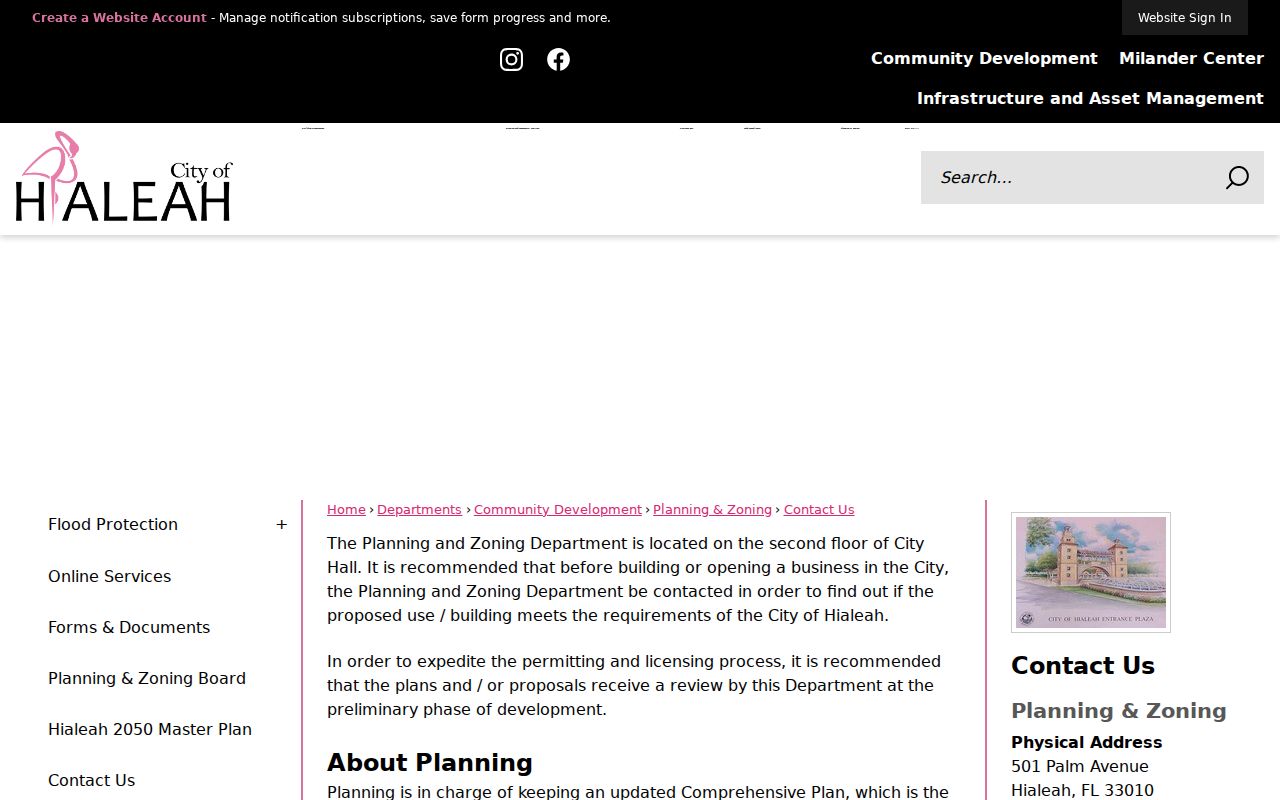
The department page should be checked for current contact and counter details before an in-person trip because exact Police Records hours were not confirmed in the research.
Hialeah’s Spanish-speaking context makes clear, accurate terms important. Language help can make navigation easier, but “arrest,” “charge,” “dismissed,” “adjudication withheld,” and “conviction” must remain distinct.
Hialeah’s Public Request Channel
The city provides a dedicated public-record route. Choose the Police Department and describe one bounded record. Include delivery contact if staff may need clarification, while recognizing that Florida law allows many ordinary requests without a stated purpose. Ask for a cost estimate before work that requires broad searches, video review, or extensive redaction.
The Hialeah records page supplies the request interface shown below.
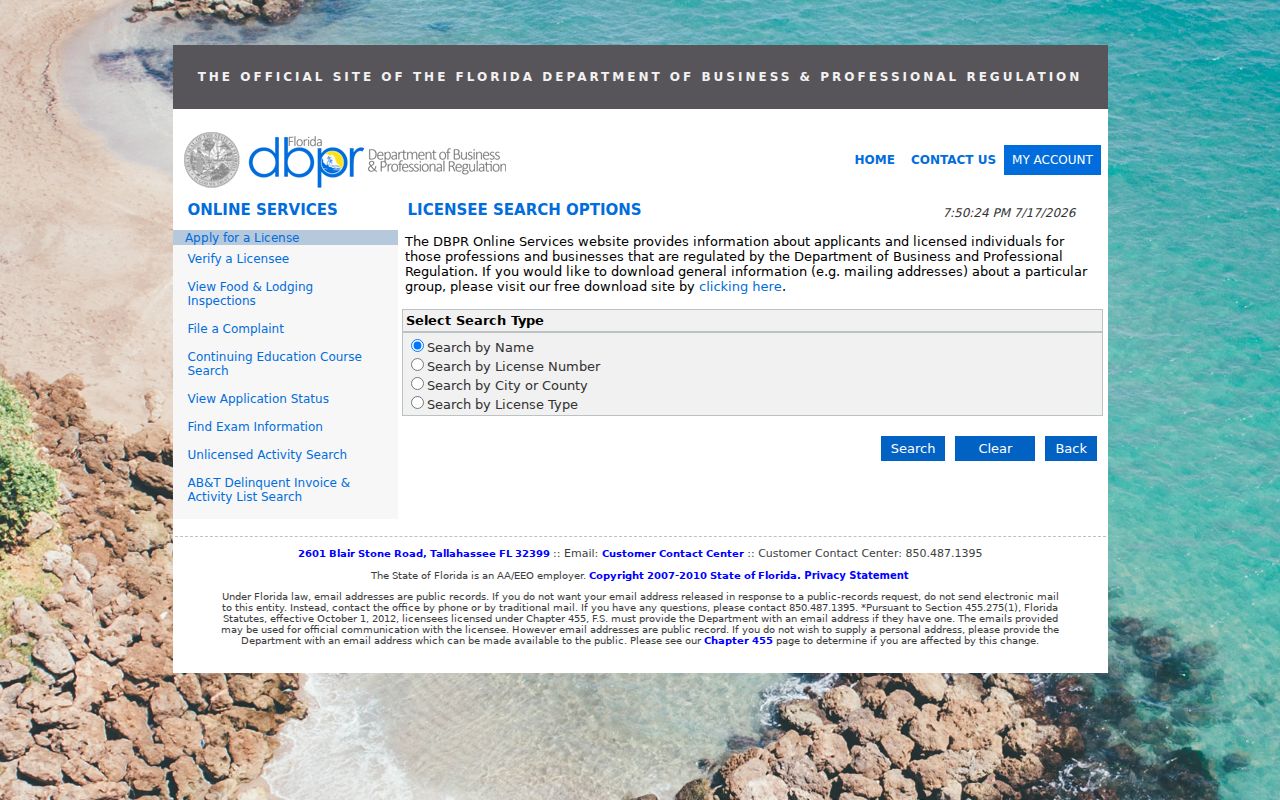
This city channel reaches HPD-created reports; it is not a statewide criminal-history search or a Clerk docket.
Hialeah Police Records
Use the city Police and Public Records pages for the current custodian, address, and hours.
Hialeah, FL
Verify live details before visiting.
Arrests and Bookings in Hialeah
When HPD takes a person into Miami-Dade detention, Corrections creates a new booking record. The city police number remains tied to the HPD event. The jail number identifies county custody. Those are separate files held by separate custodians.
Current-custody results may show booking date, facility, charges, bond fields, arresting agency, photograph, and jail number. They are operational custody data, not a verdict. Release or transfer can remove a person from a current roster even though the HPD report and Clerk case remain available.
Read the court outcome. A Hialeah booking charge is an allegation. The State Attorney can change or decline it, and the court disposition controls the result.
Three Hialeah Record Numbers
Keep every identifier. Each was designed for a different system and can rescue a search when a name is misspelled or shared by several people.
- Police number
- The Hialeah incident or agency identifier used to request the report and sometimes search CJIS.
- Jail number
- The Miami-Dade Corrections identifier created at booking and accepted as a CJIS search path.
- Case number
- The Clerk identifier created when a prosecution is filed in County or Circuit Court.
- State case number
- A uniform Florida court identifier that can help with archived or cross-reference work.
The chain is not proof that every event reached every stage. An incident may produce no arrest, and an arrest may produce no filed case.
Hialeah Municipal Court Records
Hialeah does not have a separate public felony court portal. Local code or citation tools, when offered, must not be described as criminal trial indexes. Miami-Dade County Court hears misdemeanors and criminal traffic, while Circuit Court hears felonies. The Clerk’s CJIS is the public criminal case layer.
| Court Name | Miami-Dade County Court and Circuit Court, Eleventh Judicial Circuit |
|---|---|
| Case Types Heard | Misdemeanors and criminal traffic in County Court; felonies in Circuit Court. |
| Case Lookup Channel | Clerk CJIS by case, defendant, citation or police number, jail number, or calendar route. |
| What the Docket Shows | Filed charges, hearings, counsel, pleas, dispositions, sentence, and public financial entries. |
| Copies & Fees | Request available ordinary or certified copies from the Clerk; access and charges depend on the item. |
City code records answer a narrower local question. A Hialeah criminal prosecution uses the county court system.
CJIS Serves Hialeah Cases
The Clerk Criminal Justice Online System can search by exact case number, state case number, defendant name, citation or police number, jail number, and hearing calendar. The jail-number route is especially useful just after booking. Name searches should account for two surnames, compound given names, omitted accents, and aliases without assuming that similar results identify one person.
The official Clerk search gateway is shown below.
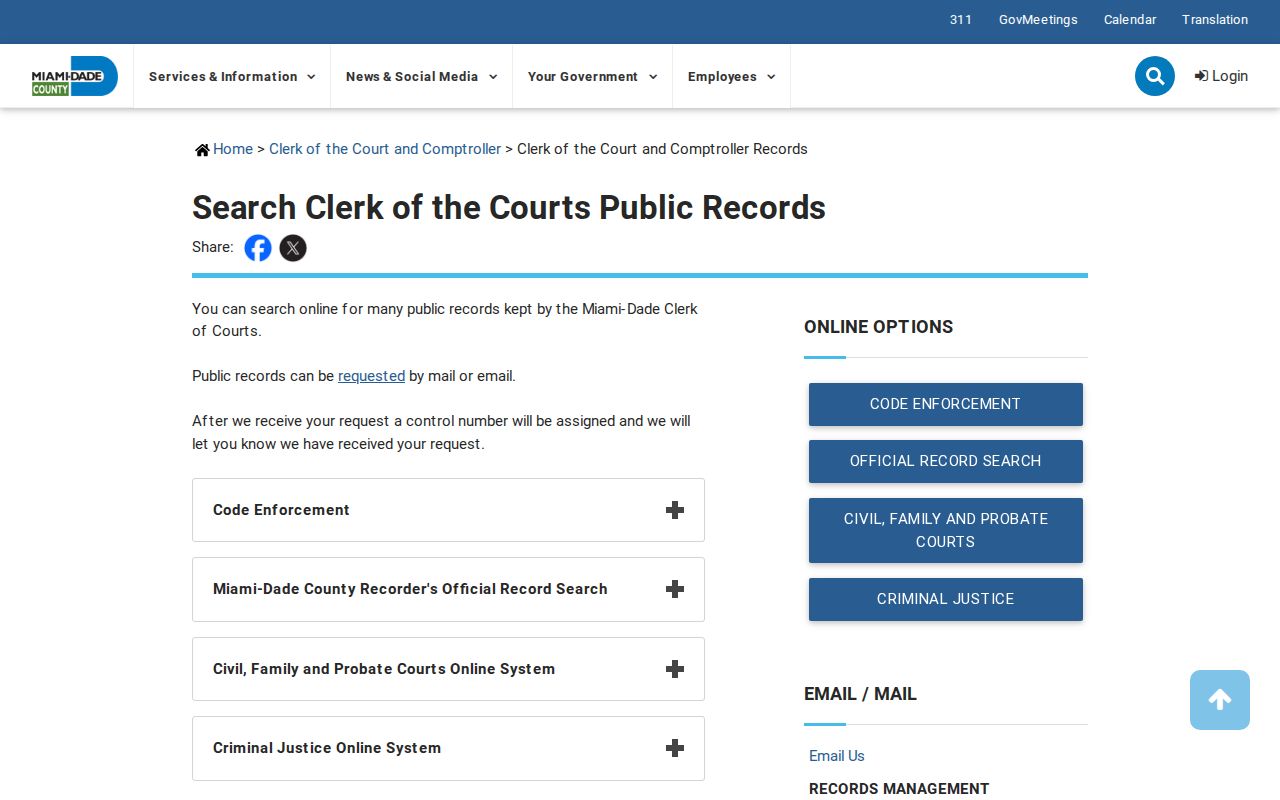
The gateway is the county court layer for Hialeah, not a replacement for the underlying HPD report.
Where Hialeah Records End Up
HPD creates the incident and arrest paperwork. Miami-Dade Corrections creates the jail record and transmits fingerprints through criminal-justice systems. The State Attorney decides the filed posture. The Clerk records the case and later disposition, which should feed back to FDLE.
Record flow: Hialeah Police Department › Miami-Dade County Courts › Florida Department of Law Enforcement.
A recent event may be visible in custody before the full docket is ready. An older event may be absent from current custody but available from HPD and CJIS. The broader Miami-Dade criminal court case search explains how to read docket events and dispositions.
When Hialeah Custody Is Empty
No current match can mean the person was released, transferred, booked under a spelling variant, never entered county custody, or was involved in an event without arrest. It does not erase the HPD report. Continue with CJIS and the city request channel.
- Try reasonable name variants and confirm the arresting agency.
- Search CJIS by police or citation number when known.
- Use the jail number from any prior booking document.
- Request the exact HPD report by incident date and location.
- Read the filed charge and disposition if a case appears.
This fallback chain separates a technical or timing gap from a legal conclusion.
Hialeah Terms in Plain Language
Translated navigation is valuable, but legal outcomes should not be collapsed into loose synonyms. An arrest records an accusation and custody event. A charge describes an alleged offense. A conviction follows a qualifying court adjudication. A dismissal ends a charge without conviction, while adjudication withheld is a separate Florida outcome and is not the same as dismissal.
| Term | What it means | Where to confirm |
|---|---|---|
| Arrest | Police action based on asserted legal authority | HPD report and booking |
| Filed charge | Prosecutor’s court allegation | CJIS charging document |
| Dismissed | Charge ended without a conviction on that count | Clerk disposition |
| Adjudication withheld | Formal adjudication withheld under the court outcome | Judgment and sentence |
Using the exact docket wording protects accuracy in both English and Spanish discussions.
FHP or Hialeah Police?
Road location alone does not decide custody. FHP holds reports its troopers create. MDSO holds county reports, and HPD holds its own. Use the citation header, officer agency, police number, and booking arresting-agency field. If several agencies joined the event, request the lead report first and supplemental reports only when needed.
A city boundary check is useful when a mailing address says Miami or Hialeah but the event occurred outside the incorporated city. Do not send the same broad request to every agency without first checking the identifiers.
Public Access Rules
Florida public-record law applies to Hialeah police files, but it does not make every page public. Active investigative material, protected victim information, juvenile records, confidential identifiers, sealed or expunged records, and some video content can be withheld or redacted. Ask the city to cite the precise exemption and release nonexempt portions.
Key Statutes:
Florida Public Records Law, chapter 119 governs custody, inspection, copies, fees, and statutory exemptions.
Florida Statutes section 943.053 controls FDLE dissemination of criminal-history information.
Florida Rule of General Practice and Judicial Administration 2.420 governs court-record access and confidentiality.
A request may seek inspection instead of paid copies. Broad video or data work can carry a special service charge, so ask for an estimate.